
Fractional CTOA Fractional CTO is a senior technology leader who works with a company part time or on a project basis, rather than as a full-time hire. Same judgment and accountability a full-time CTO would bring, sized to what an early-stage company actually needs and can afford right now. & tech advisor
for early-stage fintech and B2B founders
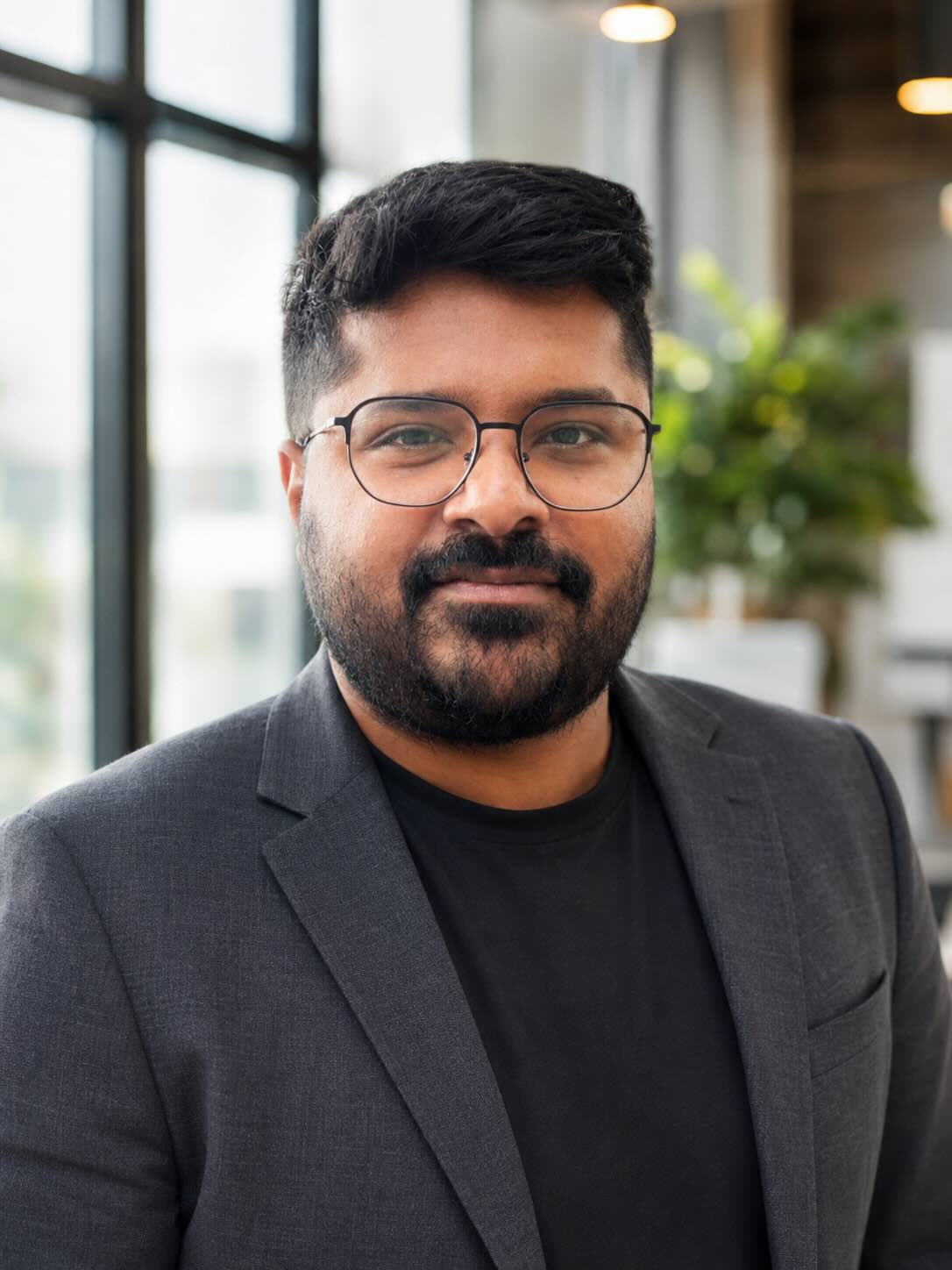
I help founders get from "the demo works" to "production handles real money," without the team burning out or the regulator calling. Twelve years building trading platforms, payment integrations, and the unglamorous plumbing that keeps fintech running.
about
I have spent twelve years building the systems that move money: trading platforms, payment integrations, API gateways, order management systems, and the parts of fintech that never make it into a demo but decide whether the company survives its first year.
I was the first technical hire at a digital lending company, where I built the integration layer with Indian banking systems, set up the data infrastructure, and built an information security practice from zero. Later, I led engineering on a cryptocurrency trading platform that went from nothing to real volume in under two months and survived a regulatory wallet lockdown a few months after launch. I have also led integration programmes inside large enterprises, and I have been the person a team called when the thing they built under pressure started breaking.
None of this happened calmly. Most of it happened at odd hours, with strong chai, and a team that trusted me enough to tell me when I was wrong. I am still that person, just with better sleep now.
Right now I work as a fractional CTO and advisor with a small number of early-stage fintech and B2B founders. I am also open to senior engineering leadership roles, including VP of Engineering, Director of Engineering, and Head of Engineering, where the work matches the convictions below.
what I actually believe
Practices outlast products.
The system you ship matters less than whether your team can operate it on Monday morning.
MVP and a sustainable team are both non-negotiable.
Skip either one, and you do not get to the second iteration.
Customer support is a tech function.
If your engineers do not know what is breaking for users, you are flying blind.
Security and observability are not features you add later.
When you handle real money, they are the cost of being allowed to do the work at all.
Tech is an enabler, never a magic wand.
It compresses time and effort on pain points that already exist. It does not solve organisational, market, or compliance problems.
how I actually work
I listen before I look at the stack.
How you talk about what has already gone wrong tells me more than an architecture diagram does. That is where I start.
I want to be in the room before the decision ships, not after.
Most of the damage I have seen did not come from bad engineering. It came from excitement, a quick yes, and nobody asking the boring questions first.
I build institutional memory where none exists.
Security practices, integration playbooks, the documentation nobody has time to write. Invisible until the day it is not, and by then it is too late to build from scratch.
Under pressure, I reach for the boring fix that holds.
Not because clever is bad, but because a tired team needs something reliable, not something impressive.
I think differently, and I have learned to use that.
Some of my best calls have come from noticing a pattern nobody else was tracking, or asking a question that felt off-topic until it was not.
what changes for you, as someone engaging me
Fewer 2am messages. Fewer surprises from systems nobody fully understood. A team that knows who to call before something breaks, not just after.
You do not have to wait for the breaking point to find out if this is a fit.
experience
Everything above comes from somewhere. Here is the record.
Working with two to three early-stage fintech and B2B teams at a time, embedded enough to be in the room for the decisions that matter, not just called in to clean up after.
Led the integrations team sitting at the centre of a large enterprise org: Dynamics 365 CRM, ERP, e-commerce, and reporting. Owned the integration layer for an Azure migration covering 60% of company revenue, and cut SLA breaches from 70% to 10% during the US go-live.
Sixth team member. Led technical direction across four cryptocurrency products: retail trading, an enterprise white-labeled exchange, a derivatives platform, and a B2B OTC platform built 0 to 1. Built the Customer Delight practice and the API Gateway layer.
First technical hire. Built the integration layer with Indian banking partners, the data infrastructure, and the information security practice from scratch. Mentored a team of 8 as the senior-most engineer.
Led the B2B platform build for partners and trainers, including web, Android, and backend APIs, for India's largest amateur sports network.
Led the technology team across customer-facing applications, third-party integrations, and production environments for a cluster of digital financial products.
Founding engineer on two consumer products: a fashion discovery platform (JFDI Asia accelerator, Singapore) and a price-monitoring platform (winner, Echelon Satellite 2014).
Freshly graduated with an MSc in Computer Science, a head full of ideas, certain I was about to change the world, and an appetite for it that never really went away.
stack
A few of these have real history. Hover or tap for the story.
also in the toolbox
writing
What it actually takes to build a fintech platform that survives launch
A 2023 story on shipping a B2B OTC trading platform, the regulatory wallet lockdown that followed, and what I would tell any founder about to ship.
Read the article → substackNotes from the Corner, Corner Table, Window Side
Longer-form, more personal writing on Substack: observational essays and short prose.
Read on Substack →reach me
If you are an early-stage fintech or B2B founder figuring out the gap between a working demo and a system that handles real money, I would like to hear about it.